ACLU: All Means All
Birthright Citizenship According to Respondents (as represented by the ACLU)

This post is part of my Immigration 101 series, giving you background info about immigration law and procedure so you have context for what you hear in the news, on social media, and in conversations with others.
This post is educational only, and should NOT be relied on as legal advice.
This Wednesday (April 1, 2026), the US Supreme Court will hear oral arguments in the case of Trump v. Barbara in its quest to answer a single deceptively simple question:
Does the Executive Order, signed by President Trump on January 20, 2025, limiting birthright citizenship to only those children who have at least one US Citizen or Permanent Resident parent violate the language of the 14th Amendment to the Constitution, which states that “All persons born or naturalized in the United States, and subject to the jurisdiction thereof, are citizens of the United States and of the State wherein they reside.”?
Almost immediately upon its issuance, the Executive Order was challenged in the courts, with a class action lawsuit filed under pseudonym by two babies subject to the EO and their parents, along with a pregnant woman who has since given birth. The federal district court certified a “children-only class” and granted a preliminary injunction, preventing the EO from taking effect. That order was appealed by the government to the First Circuit Court of Appeals, which unanimously held that the EO violated the Citizenship Clause of the 14th Amendment and immigration law. The government then filed a petition appealing that ruling to the Supreme Court, which ultimately brings us to where we are today. In this summary, the plaintiffs who originally brought the case will be referred to as the “Respondents” because they are the ones responding to the government’s appeal.
Just as with the summary of the Trump Administration’s arguments, what follows below is a summary of the Respondent’s Legal Brief, as submitted to the Supreme Court in their role as petitioners in the case, and the reasons they say their interpretation of the 14th Amendment is the correct one.
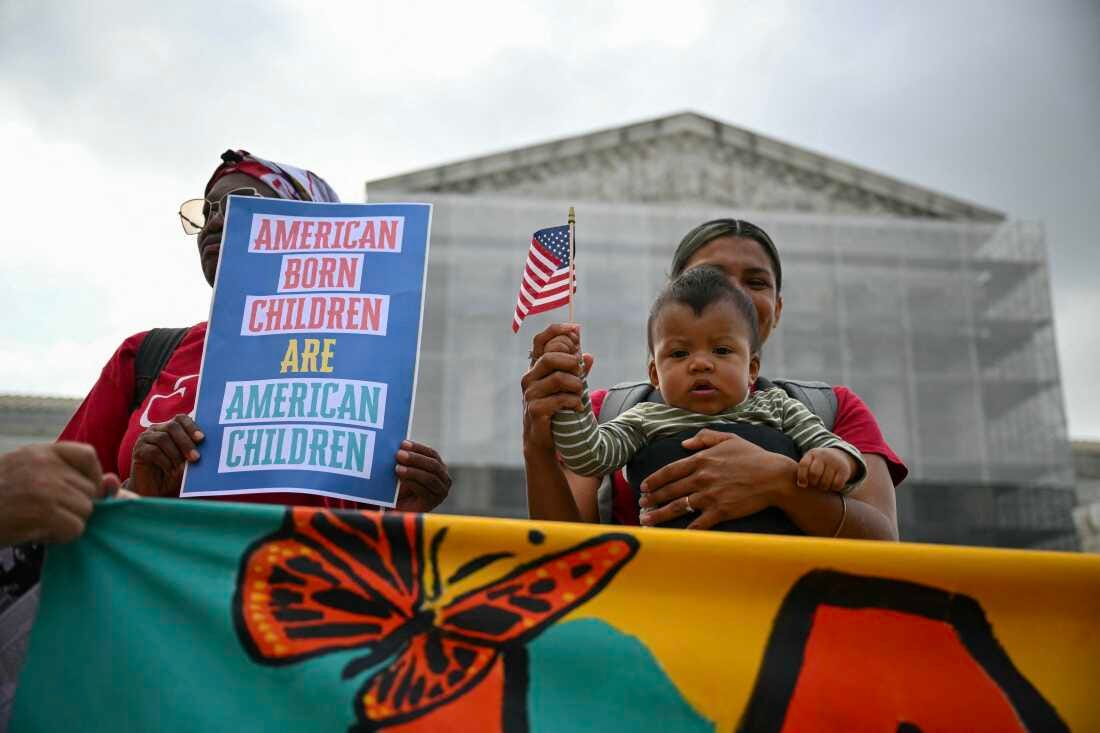
The below summary of the arguments and reasoning is written from the point of view of the Respondents, so read it as if it is coming from their perspective as a party to the litigation. That said, I happen to agree with their arguments, and many of their points are the same ones that I raised in the footnotes in my summary of the Administration’s brief. 😉
The Ultimate Originalist Approach
The 14th Amendment’s Citizenship Clause states:
All persons born or naturalized in the United States, and subject to the jurisdiction thereof, are citizens of the United States and of the State wherein they reside.
The government’s position can be summarized as follows: Only the children of those who are “domiciled” in the United States can be granted citizenship upon birth because only those who are “domiciled” in the US are subject to political jurisdiction - i.e., they are the only ones who can claim and establish complete and total allegiance to the United States.
This position is baseless: “The English common law concededly forecloses it. American law rejected it. The text of the Clause rebuts it. And the Framers’ design cannot be squared with it.”
Domicile is a Dead End Approach
At English common law, virtually all children born within the domains of the King were subjects. This practice continued in both England and America at the time the 14th Amendment was drafted and ratified. Thus, with the words “all persons,” the US adopted the English-common law rule of citizenship by birth and rejected citizenship by parentage.
Historically, there are only a few discrete exceptions to the English rule:
Children born to foreign ambassadors were not granted American citizenship because while they were physically present in the US, they were considered to be “in the place of the sovereign” they represented and as if they were on their home country’s soil … i.e., they were “extraterritorial”. This same immunity, though, did not extend to private individuals.
Similarly, children born to invaders “during and within their hostile occupation” would not be granted citizenship because while the country was under hostile occupation, the country’s own sovereignty and independence - and therefore its laws - would be suspended and not enforced.
When first ratified, the Citizenship Clause excepted children born as members of Native American tribes from US citizenship on the same reasoning as that of diplomats. That exception has since been addressed by legislation which grants US Citizenship to all Native Americans born in this country.
Even before the Civil War (and thus before the 14th Amendment), American courts specifically upheld US citizenship for children “born of alien parents, during their temporary sojourn” starting with the seminal case of Lynch v. Clarke. American Attorneys General relied on the analysis in this case, and its dominance at the time of the 14th Amendment’s framing is extensive. Indeed, in Wong Kim Ark, the Supreme Court relied on Lynch, noting that the Citizenship Clause “was not intended to impose any new restrictions upon citizenship”. And while the Court in Wong Kim Ark mentioned the word “domicile” more than 20 times, the government ignores the other 20,000 words of the opinion where the Court specifically foreclosed the government’s parental domicile argument by recognizing that a every foreign national, domiciled or not, owes a temporary and local allegiance to the US for so long as he is here. Those 20,000 words are just as binding.
The Framers never discussed a supposed domicile rule when debating the Citizenship Clause. To the contrary, a parental domicile requirement would also be contrary to the Framers’ clear intent of “put[ting] citizenship beyond the power of any governmental unit to destroy” because it would make citizenship subjective, uncertain, and contingent on the subjective “intention” of the parents to “remain” in the US. Such uncertainty could and would be easily exploited by those hostile to birthright citizenship.
Lastly, and contrary to the government’s incoherent definition of the word, temporary visitors and undocumented immigrants are “domiciled” in this country because they reside here with an “intention to remain”. The government’s argument that undocumented immigrants lack the legal ability to establish domicile in the US is, plainly stated, made up out of thin air. There is no such law or legal tenet to that effect.
“Subject to the Jurisdiction Thereof” ≠ Political Allegiance
The central issue to interpreting the limits of the 14th Amendment’s Citizenship Clause is what is meant by the phrase “subject to the jurisdiction thereof”:
All persons born or naturalized in the United States, and subject to the jurisdiction thereof, are citizens of the United States and of the State wherein they reside.
“Jurisdiction” does not mean political allegiance or loyalty (like the government says it does), but rather means “obedience to the law”. The government’s interpretation - which they came up with nearly out of thin air - is wrong for several reasons:
To start with, at English common law, the relevant allegiance was that of the child, not the parent. But even with regard to parents, all foreign visitors owed “temporary and local” allegiance to the King for as long as they remained in his kingdom. This temporary allegiance meant that foreign nationals had to follow the law and could be punished for crimes - including treason - while present there. In exchange, the King owed them protection, including in the form of his own laws. Today, even those unlawfully within the US are entitled to the protections of the Constitution.
At the time of the 14th Amendment’s ratification, “jurisdiction” meant “the authority of the government” and it continues to mean that to this day. And if the Framers meant to reject the common law and impose a domicile requirement, they could have - and would have - done so, the same way that they did when they imposed a residency requirement for presidential eligibility. And yet, they did not.
Undocumented immigrants are clearly “subject to the jurisdiction” of the United States because they are subject to the laws of the United States, including immigration laws. And to the extent that the government contends birthright citizenship would allow a person to take advantage of their own wrongdoing, their focus is misplaced. The Citizenship Clause is about recognizing a child’s status, not punishing any supposed sins of the parents. The Supreme Court in Korematsu recognized this as a fundamental American tenet: guilt is personable, not inheritable.
All Means All
The government complains that birthright citizenship draws immigrants to this country, but that is a “feature of American life that the Framers embraced, alongside freedom and equality.” Birthright citizenship is “foundational to who we are as a Nation.” And while the Executive Order may be drafted in a way that only applies on a going-forward basis, “the interpretation the government advances would be the beginning, not the end, of a constitutional revolution rippling out in innumerable ways - some of which can be anticipated, others perhaps not. In 1862, Attorney General Bates explained that birthright citizenship is not a matter of descent, but rather is “original in the child.”
The Framers of the Citizenship Clause intended to put citizenship beyond the power of any single governmental unit to destroy it.
“All persons born or naturalized in the United States, and subject to the jurisdiction thereof, are citizens of the United States and of the State wherein they reside.”
All means all.
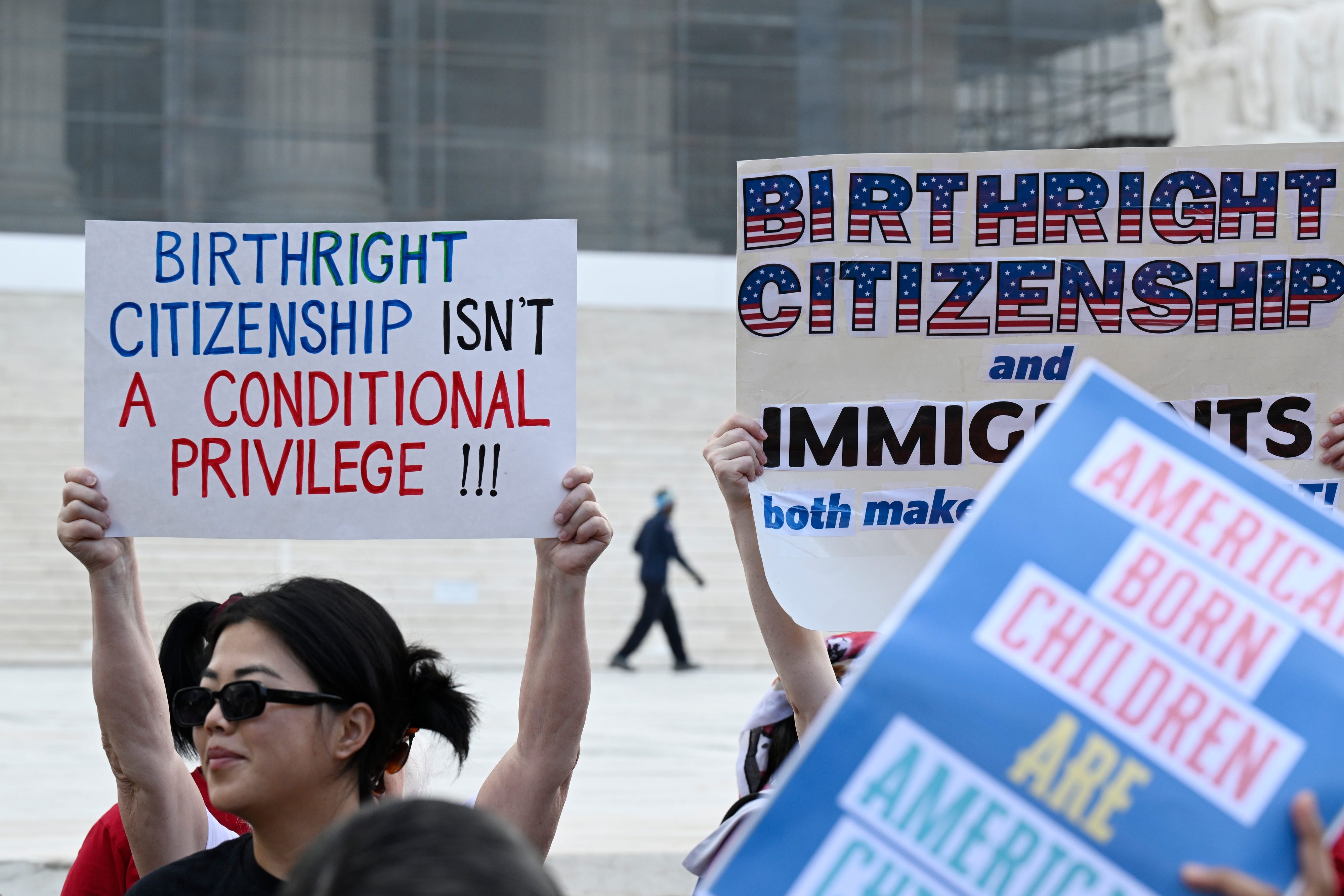
Listen to the Oral Arguments
Oral Arguments are scheduled for 10:00 am on Wednesday, April 1, 2026 and the Supreme Court broadcasts a live audio feed which you can listen to here.

I’ll be one of the lucky few who will get to be there in person tomorrow, watching history unfold before me, and will be recapping the experience here and on my other social media platforms (with extra behind-the-scenes content for Immigration Insiders). If you don’t follow me yet, you can find me in all places as @attorneychristina (Instagram; Threads; and TikTok)